













Geography and Climate
Located in the southern one-third of Central America, Costa Rica (rich coast in Spanish) is framed by Nicaragua on its northern border, Panama on its southern border, the Pacific Ocean to its west and the Caribbean Sea to its east. With just under 20,000 square miles of land and over 800 miles of coastline, Costa Rica is slightly smaller than the state of West Virginia.
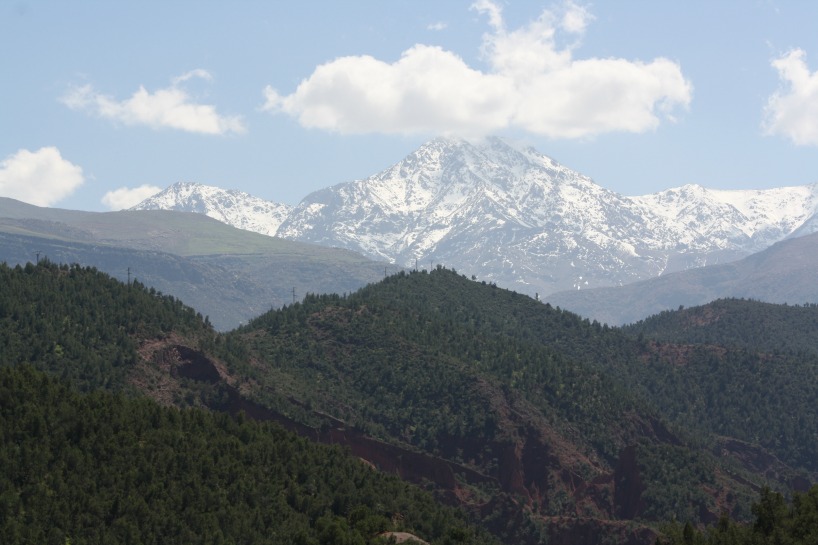
Costa Rica is mostly verdant coastal plains on the Caribbean and the Pacific, separated by mountain ranges. Cerro Chirripó at 12,530 feet is the fifth highest peak in Central America and Irazú at 11,257 feet is the highest volcano in the country. Over 100 volcanoes in Costa Rica are still active.
The capital of Costa Rica, San José, is located in a highland valley in the central part of the country known as the Meseta Central.
Costa Rica has been a paradise for nature lovers and environmentalists for years and shelters the greatest density of species in the world. Amazingly, the country is just one-fourth of 1 percent of all the land in the world, but is home to 5 percent of earth’s biodiversity. And, over 25 percent of the country is protected by the National System of Conservation Areas (SINAC), which oversees the protected areas.
Like many Central American countries, Costa Rica is in the U.S. Central Standard Time zone, but does not observe daylight saving time.
Because of its close proximity to the equator, Costa Rica generally has a tropical climate, but many microclimates exist within the country, depending on elevation, rainfall, topography and geography. Rather than four seasons, Costa Rica has a dry season and a wet season. The dry season is from December to April and the wet season runs from May to November. On or near beaches, the climate is hot and humid, with most days reaching over 90 F. The Caribbean coastal areas are more humid than the Pacific coast. Mountainous regions are much cooler with the highest temperatures mostly reaching the low 70s. The central highland valley, where the capital San José is located, is more temperate, with highs year-round in the 70s and 80s and much less humidity.
Costa Rica often sees strong storms during its wet season, particularly on its Caribbean coast. Heavy rainfall that produces flooding and mudslides is not uncommon. Earthquakes are part of everyday life in the country, with most activity along the Pacific coast. Active volcanoes are also a concern.
People and Culture
About half of Costa Rica’s over 4.8 million people live in the capital city of San José in the high Central Valley. About two-thirds of the country’s population lives in the valley. Other important cities are the old colonial capital, Cartago, Alajuela and Heredia. The main port cities are Limón on the Caribbean and Puntarenas on the Pacific.
The language of Costa Rica is Spanish, but a mix of a southwestern Caribbean Creole dialect of English is spoken in the Limon region. About 94 percent of Costa Ricans trace their heritage to European and Mestizo decent. African, Chinese and Amerindian ethnicities make up the remaining 6 percent.
Costa Ricans feel distinct from their neighbors by their overwhelming European heritage and relative lack of indigenous culture. The people, who identify themselves as Ticos, consider themselves first and foremost Costa Ricans and only Central Americans or Latin Americans as an afterthought.
The first European explorer to encounter Costa Rica was Christopher Columbus on his final voyage to the New World. He found local Carib Indians, who influenced the name of Costa Rica, or rich coast in Spanish, because they wore golden bands in their noses and ears. Although explored by the Spanish early in the 16th century, initial attempts at colonizing Costa Rica proved unsuccessful due to a combination of factors, including disease from mosquito-infested swamps, brutal heat, resistance by the natives and pirate raids. It was not until 1563 that a permanent settlement at Cartago was established in the cooler, fertile central highlands.
None of the indigenous tribes lasted long after the Spanish began colonizing the country because of disease brought from Europe. The area remained a Spanish colony for some two and a half centuries.
In 1821, Costa Rica became one of several Central American provinces that jointly declared their independence from Spain. Two years later it joined the United Provinces of Central America, but this federation disintegrated in 1838, at which time Costa Rica proclaimed its sovereignty and independence. Since the late 19th century, only two brief periods of violence have marred the country’s democratic development. In 1949, Costa Rica dissolved its armed forces to redirect much of its government spending to education and healthcare for its people. Although it still maintains a large agricultural sector, Costa Rica has expanded its economy to include strong technology and tourism industries.

No Comments