













Expats move abroad for lots of different reasons, most often for an adventure, work or retirement. But the Mouttaki family moved to Marrakesh, Morocco for a very unique reason: to educate their children.
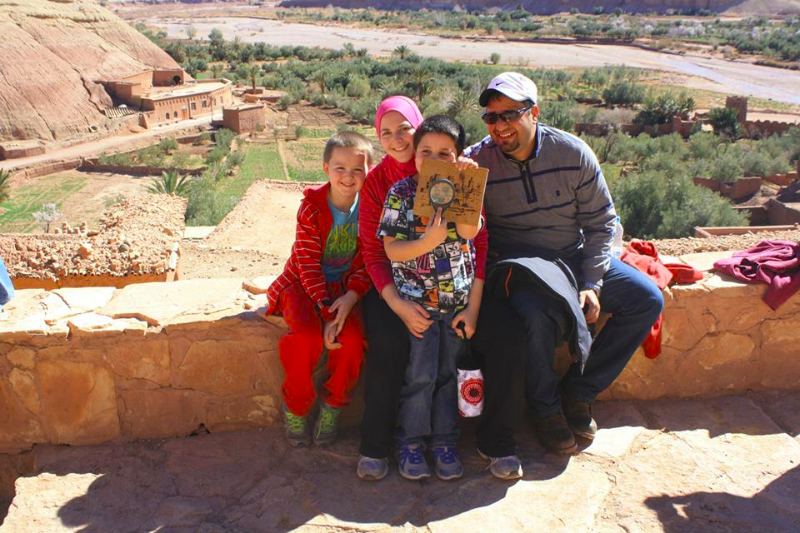
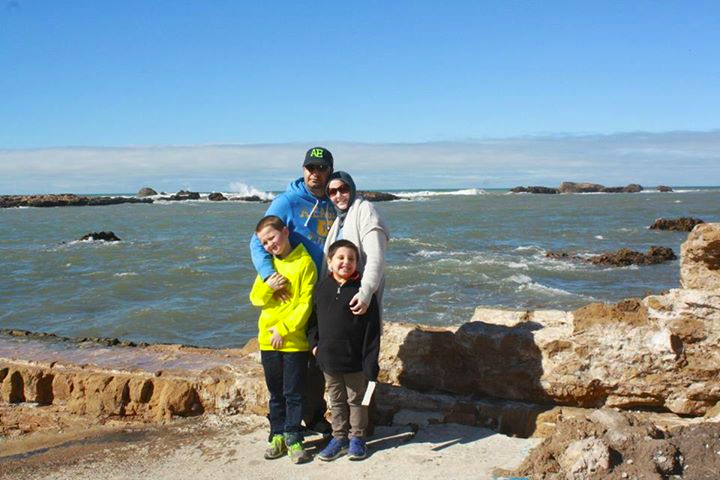
Amanda Mouttaki and her Moroccan husband Youssef moved to Morocco last year to live with his family and have their sons, 10-year-old Mikhail and 7-year-old Khalil, learn the languages of their father, Arabic and French.
“We wanted our kids to get to know Youssef’s family more than you could in short visits and really learn the language because they had no way to communicate with his family,” Mouttaki said.
It was an easy move for the Mouttaki family, who had lived in Wisconsin and Washington D.C. Both 30-years-old, Amanda is a freelance writer and blogger and Youssef works remotely as a computer programmer. Youssef grew up in Marrakesh and attended local schools.
“My husband did not have a very good experience in Moroccan public schools growing up,” Mouttaki said. “So we looked up American, French and Canadian schools when we arrived. There are international education options but our focus was for them to learn Arabic and French.”
Homeschooling also was a consideration. “We thought perhaps we could homeschool them and get a tutor for a couple of hours each day for the first six months or a year,” Mouttaki said. “That was our backup plan if we could not find a local school that would take them.”
She explained that there is a dual local education system in Morocco, consisting of Moroccan public and private schools. Public schools are compulsory until age 16, but not highly regarded.
“Moroccan public schools are not very good,” she said. “The teachers are not well paid, do not have very good training and do not have a choice of where they teach. Public schools, especially in the large cities, also are overcrowded, with sometimes as many as 40 kids in each class.”
There is a local alternative to overcrowded public schools, though. Mouttaki told us private schools in Morocco are not like U.S. private schools, which are elite and pricey. A good quality private school in Marrakesh costs less than US$100 per child each month. By comparison, the American international school in Marrakesh would cost over $13,000 a year per child.
The Mouttaki’s decided to place their boys in a local private Moroccan and French school that had some English instruction. “The school is completely bilingual, half the day is in Arabic and the other half is French,” she said. “They also teach a half hour of English a week.”
Mouttaki believes the biggest difference between U.S. and Moroccan schools is bi-lingual education. “In Morocco, it is not even a question of having exposure to a second language,” she said. “You are going to know two languages, and by the time you are done with high school, maybe four or five. Our boys have two math books, a math book in Arabic and one in French. So on Monday they do a math lesson in Arabic and then the next lesson is in French. That is one of the big differences I see.”
Another difference is the expectations placed on children in Moroccan schools. “Our oldest son should have been entering the fourth grade in the U.S., but because he didn’t have any of the language skills, they initially put him in the same grade level as our youngest, first grade,” Mouttaki said. “They do not have any support system to keep children at a grade level, no tutoring or a translator to help them through the initial language learning process.”
The school’s curriculum also is quite different from U.S. schools. “American schools focus more on independent thinking, creative thinking and critical thinking. The local curriculum places emphasis primarily on skills-based learning, reading and writing. It is much more adult-led, rather than child-led.”

No Comments