

















Geography and Climate
Shaped like a boot, Italy stretches south from the Alps mountain range in the north to the Mediterranean Sea in the south, over 700 miles in length. Bordered in the north by Slovenia, Austria, Switzerland and France, the Italian peninsula is over 200 miles wide. Italy’s long coastline touches the Tyrrhenian and Ligurian Seas to its west, the Adriatic and Ionian Seas to its east and the Mediterranean Sea to its south.
The country is slightly larger than Arizona, which makes it the seventy-second largest country by area in the world. Italy’s 116,334 square mile land area also includes Sardinia and Sicily, the two largest islands in the Mediterranean. The tiny sovereign states of Vatican City and San Marino also reside within Italy’s borders.
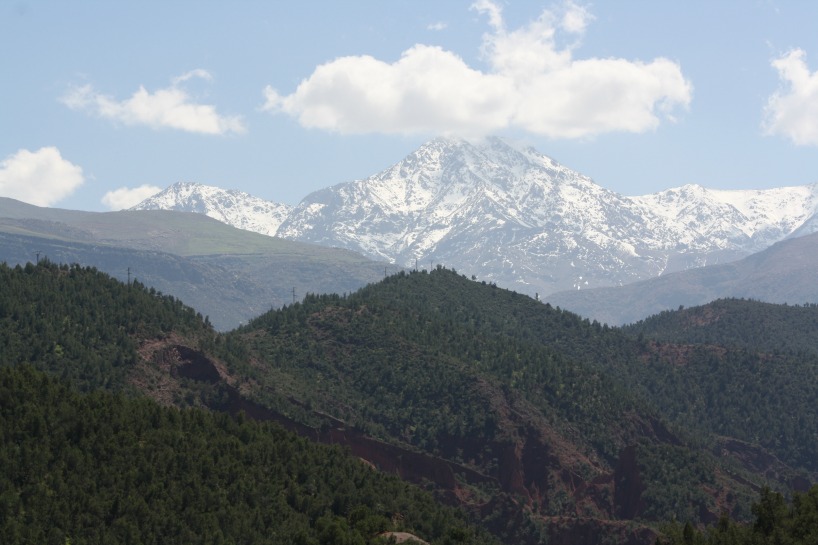
The Apennine Mountains form the Italian peninsula’s backbone, running down the center of the country from north to south. Gran Sasso peak in the central Appennine range rises nearly 10,000 feet in elevation, but Italy’s highest peak is 16,000 feet Monte Blanco or Mont Blanc, which lies between Italy and France. Italy is also known for the beauty of its northern lake country, which includes Garda, Maggiore and Como lakes.
Italy is on Central European Time, which makes it six hours ahead of the U.S. Eastern time zone. The country observes daylight saving, which starts in March and ends in October.
The climate varies considerably from north to south with more European weather in the north and Mediterranean weather in the coastal areas and the south. The northern area climate between the Alps and the Tuscan-Emilian Apennines is harsh, with very cold winters and very hot, humid summers. In central Italy the climate is milder, with a smaller difference in temperature between summer and winter and a shorter and less intense cold season than in the north. In southern Italy and the islands, winters are never particularly harsh and spring and fall temperatures are similar to those reached in the summer in other areas of Italy. In the winter months, high temperatures range from 20 F in the north to 50 F in the south. During the summer, high temperatures range from 80 F in the north to 90 F in the south.
Italy has had many natural disasters in its history, including mudslides, landslides, avalanches, volcanic eruptions, flooding and earthquakes. Like many of its neighboring Mediterranean countries, Italy is very prone to earthquakes. The 2009 earthquake in central Abruzzo left 17,000 people homeless and nearly 300 people dead. Mount Etna on Sicily is Italy’s most active volcano and one of the most active volcanoes in the world. It last erupted in 2010. Mount Vesuvius, near Naples, has erupted more than 50 times since its eruption in 79 A.D., when it buried Pompeii and its sister city, Herculaneum.
People and Culture
Italy’s population of 61 million makes it the fifth largest country in Europe and the twenty-third largest country in the world. Its annual growth rate, however, is negative with more deaths than births each year and few new immigrants. The median age in the country is just under 44 years.
The primary language and ethnicity is Italian, although French, German and Slovene are spoken in northern border areas. Over 80 percent of the country is Christian, primarily of the Roman Catholic religion.
Administratively, the country is subdivided into 20 regions. Five regions have a special autonomous status that enables them to enact some local legislation. The country is further divided into 110 provinces and 8,100 municipalities. Rome is the capital and has a metropolitan area population of over 4 million. Other large cities in Italy include Milan with a metro area population of about 7 million, Naples 3.7 million and Turin over 2 million.
Historically, Italy’s origins began in the 9th century B.C. with Italic tribes in the central region of Italy. The Latin culture became dominant later as Rome became a powerful city-state around 350 B.C. The Roman Empire later dominated Western Europe and the Mediterranean basin for many centuries, making contributions to the development of philosophy, science and art that remained central to societies in the Middle Ages and the Italian Renaissance. After the fall of Rome in 476 A.D., Italy remained fragmented in numerous city-states for centuries.
Italy became a nation-state in 1861 when the regional states of the peninsula, along with Sardinia and Sicily, were united under King Victor Emmanuel II. An era of parliamentary government came to a close in the early 1920s when Benito Mussolini established a Fascist dictatorship. His alliance with Nazi Germany led to Italy’s defeat in World War II. A democratic republic replaced the monarchy in 1946 and economic revival followed. Italy was a charter member of NATO and the European Economic Community (EEC). It has been at the forefront of European economic and political unification, joining the Economic and Monetary Union in 1999.


No Comments