



































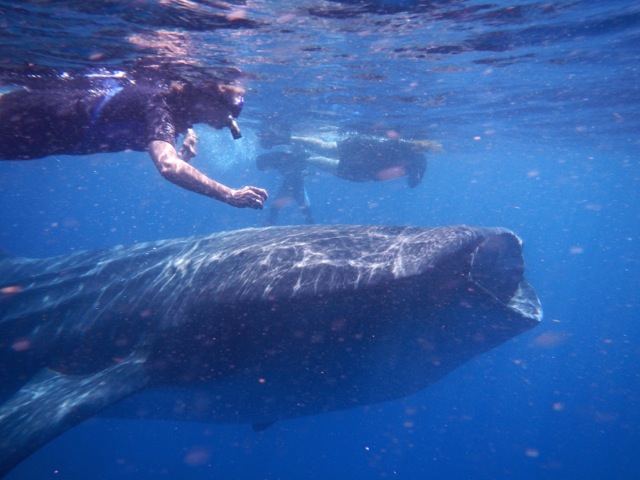




Did you miss World Oceans Day? Do you care? You should, and here’s why.
Created at the Earth Summit in Rio de Janeiro in 1992, World Oceans Day was officially recognized by the United Nations in 2008 and is celebrated annually on June 8th to call attention to the global pollution and over-consumption of fish that are causing long-term damage to the seas of the world.
World Oceans Day is important because it puts a magnifying lens to an environmental problem most of us don’t think about every day. But we should. In a New York Times articles earlier this year, Dr. Douglas J. McCauley, an ecologist at the University of California, Santa Barbara, said, “We may be sitting on a precipice of a major extinction event.” McCauley and a team of scientists, according to the Times, analyzed data from hundred of sources and have concluded that humans are on the verge of causing unprecedented damage to the oceans and the animals living in them, although McCauley says the oceans are still wild enough to bounce back to ecological health if we take action.
Ocean ecological change dates back to the early years of the industrial revolution and has increased proportionately over the decades. McCauley and his team found that many ocean species are being over-harvested, habitat is being damaged and carbon emissions are affecting the chemistry of seawater, making it more acidic.
As an example, the Times article points out that coral reefs around the world have declined by 40 percent, partly as a result of climate change warming. Bottom trawlers used in large fishing operations have affected 20 million square miles of ocean, turning parts of the continental shelf to rubble, according to the Times. And, large-scale mining operations now cover 460,000 square miles underwater and tear up unique ecosystems.
McCauley still thinks there is time to reverse this degradation and the United Nations agrees. Its United Nations Educational, Scientific and Cultural Organization (UNESCO) arm is taking the lead. On World Oceans Day 2015, UNESCO dedicated a full day of activities in Paris to the ocean’s role in the climate system to prepare for upcoming global climate change negotiations in Paris later this year.
Private organizations like The Ocean Project also use their network of zoos, aquariums, museums and other organizations to promote healthier oceans.
Wherever you live, you can help. Find out more at this UNESCO webpage.

